
Readings: Jeremiah 20:7-9; Psalm 63:2, 3-4, 5-6, 8-9 (2b); Romans 12:1-2; Matthew 16:21-27
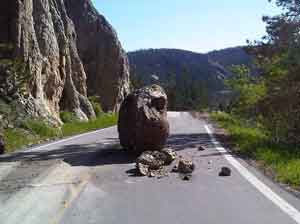
Are you an obstacle?
In last week’s Gospel, we hear Peter’s response to Jesus question, “who do you say I am?” Peter responds with “You are the Christ, the Son of the living God.” And Jesus tells Peter he will give him the keys of the Kingdom of Heaven, putting Peter in charge of the Church. But at that point, Peter didn’t fully understand God’s will.
Immediately following that passage, in today’s Gospel reading, we hear Jesus telling the disciples that he must suffer, die and be raised on the third day. We can understand why Peter reacted the way he did, rebuking Jesus, literally grabbing him to pull him aside, and telling Jesus that cannot happen. But Jesus response to Peter, who he had just given the keys of to the Kingdom of Heaven is unexpected, “Get behind me, Satan! You are an obstacle to me.” Jesus response to Peter seems harsh to us, as it most likely seemed harsh to Peter also.
As Jesus points out to Peter, he is thinking in human terms, not as God thinks. It is the same message we hear from Paul, to “not conform yourselves to this age, but be transformed”, to “discern what is the will of God.”
So what is the will of God? Ultimately, I believe God’s will is for each of us to know how much God loves us, for us to love God in return, and for each of us to decide to follow God, so one day, we will be invited to spend eternity in Heaven.
As Jeremiah discovered, following God’s will is not always an easy path to follow. Jeremiah was a prophet around 600 BC. After the death of King Josiah, the people started returning to their ways of idolatry, worshiping false gods, putting things of the world above God. Jeremiah opposed it with all this strength. Because of his opposition, he was attacked, beaten, put into stocks, arrested, imprisoned, publicly disgraced, and even thrown into a cistern. He got to the point where he decided to stop speaking up. But he is so committed to do God’s will, so aware of God’s designs, that like it or not, he cannot help but remain a mouthpiece for God’s unsettling word.
Today, it seems like Christians are suffering everywhere. Christians are dying in parts of the world because they are Christian. Closer to home, we are under attack for our beliefs in God. We are to speak about God only in our homes and places of worship, but not at work, in schools or in other public places. We are forced to pay for drugs that cause abortions. We are bombarded with propaganda in support same sex marriage, even though God created marriage to be between one man and one woman, so as to share in God’s creation powers. We are told we are “out of touch” with the world.
But being “out of touch” with the world, is exactly the place we are to be. While we are “in this world,” we are not “of this world”. We were created for something bigger, something better. We were created by God, to love God. But unlike our governments and some institutions which try to force us to follow them, God does not forced us to love or even follow Him. God gave us free will, so we can decide. He gives us this time on earth to get to know Him, to learn to love Him as He loves and knows us. He gives us time to learn His will, ultimately hoping we will follow it.
So how can we learn about God’s will? As always, we need to spend time in prayer, every day. We need to continue to work on our personal relationship with Jesus. And we need to spend time in study, to learn more about God, by learning more about the teachings of the Church. Jesus put Peter in charge of the church, to help guide us and draw us closer to God. That responsibility has been passed on through all the Popes, and spread across the world through the leadership of our Bishops, And those teachings are passed on to the members of our community through our Faith Formation programs. It is a way for us to learn, as a community, more about our faith, both from the materials and from each other. It will help us learn about God’s will, and strengthens and encourages us to follow God’s will.
So my challenge for each of you, as we take a few moments of silence before coming to the table to receive the Eucharist, Jesus’ sacrifice for us, is to decide right now, do you want to learn more about God’s will? Do you want to to prepare yourself to spread God’s will to others? Do we want to be like Jeremiah and to understand God’s will and be willing to suffer for the sake of it? Or are you going to be an obstacle?
By learning more about our faith, it will give us the knowledge and courage to share the faith with others. It will help us to stand up and voice our faith, our beliefs and the teachings of the Church. It will help us to stand up to the things of this world, which are obstacles to God’s will. It will help us help others be drawn closer to God. And by doing this, we will discover we are following the will of God, and we are not an obstacle.
Recent Comments